

Will favelas murder Rio's Olympic glory?
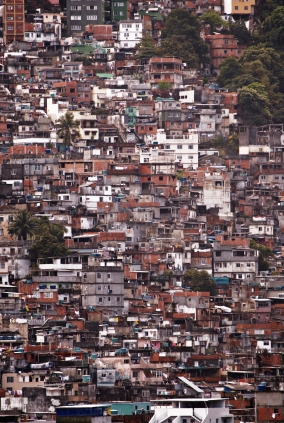
As one of the world’s most visually impressive cities, it is no surprise that Rio de Janeiro was selected to host the 2016 Olympic Games. But behind the beautiful beaches and rosy economy of Brazil, the favelas or shantytowns cast a dark and long shadow on the capital. Private armies control different quarters of the favelas, terrorizing the neighborhood and killing civilians. Deaths occur at seven casualties a day (2,757 homicides were reported last year), with some due to the police force cracking down on gangs and criminals. Their location on the country’s prized real estate—a seaside hill—belies the terrible poverty and terror of more than one million residents in their day to day lives.

Favela Vidigal paints a serene picture that hides the terror of organized crimes.
(Photo by Roney)
“Shoot first and ask questions later”
Maiza Madeira, a resident of the Rocinha favela, points to a nearby house where a seven-year old boy was hit in the head by a stray bullet after stepping out to get his school shoes a little over a year ago. “I love it up here,” she says, “but I only come out during the day, never at night.”
Everyday, favelas double as a battlefield where shootouts between gangs and police are as routine as looking for something to eat. Boys as young as 12 years old compose the bulk of various gangs that strut around the shantytowns, trafficking guns and drugs. Thus, Rio police often raid the favelas, although violent reception has led then to unofficially adopt a policy of “shoot first and ask questions later” – thousands die every year as a result.
Those who survive are taken into custody and thrown into jail, where they await release to re-join their gangs. In fact, a visit to local detention centers will yield the sight of young boys held for armed robbery, weapons possession, and murder.
Burning the favelas to the ground
 Rio is often derided as one of the most violent cities in the world, and the favelas deserve much of the blame for the city’s reputation. The obvious solution would be to just do away with them. But in Rio’s crime hotspot, nothing is simple.
First, the relocation of shantytown residents presents a formidable logistical challenge. An estimated 19 percent of the city’s population lives in the favelas, which is no small number, considering that Rio is inhabited by more than six million people. Second is the fact there could be a possible uprising once this happens. How can you pit hundreds of thousands of people, some of them armed with deadly weapons, to a police force whose some members trace their roots to the favelas?
Government intervenes
So far, the Brazilian government hasn’t gotten very far from the drawing board in its effort to solve the favela problem. Though many actions have been taken over the decades, they simply were applied on too small a scale, as well as being sparsely funded and half-heartedly implemented.
Recently, Brazil President Luiz Inacio Lula da Silva revealed to BBC the government initiatives to make a dent on favelas’ dire poverty which is the root cause of their many problems. "We have the biggest investment programme of shanty town urbanisation, basic sanitation and house building that Brazil has ever had. When we created our growth acceleration programme in 2007, we invested more than 100bn reais (£30bn) to take care of basic sanitation and build houses," he was quoted as saying.
The program, called the Habitar Brasil (Inhabit Brazil), aims to urbanize and modernize the country’s shantytowns. Instead of trying to relocate the favela residents, it will concentrate on improving infrastructure and delivery of basic services as well as creating job opportunities.
Rio and the challenge of the Olympics
The big question, of course, is if Rio will be able to complete its makeover by the 2016 Olympics, given its government’s penchant for slow action and fund misuse. One thing is for sure: nothing will tarnish Rio’s image more than an outbreak of violence during the Olympics.
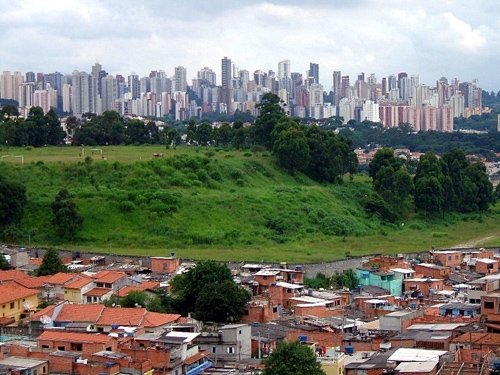
The favelas provide a stark contrast to the improving economy of Brazil.
(Photo by Dornicke)
Rio would do well using the precious funds and income generated by its preparation for the Games in the best way possible – improving the favelas’ quality of life, and setting its inhabitants up for the long term. But with the crimes still rampant as ever and the gangs gathering power and influence by the day, it seems that Brazil has still a lot of blood to clean up.

The latest features
Summer Destination to Avoid: Gulf of Mexico
 EPA is failing to do their job monitoring the air and reporting factual data. The people need to be made aware that their lives and long term livelihood are at stake because of the air quality in Gulf of Mexico.
How to Avoid Traveling Troubles
 Traveling to a certain destination might not become memorable if there are too many troubles along the way. Remember that even the best trips are usually not trouble-free. Follow these tips that help lessen the hassles.
Unique Toys from Japan
 Japan is known for its fascinating, and sometimes, eccentric culture. From anime, karaoke, to advanced technology, the Land of the Rising Sun always has something unique to offer.
Exploring California's Venice Beach
 Travelers who are after the sunny side of Southern California can visit the beautifully eccentric Venice Beach, also known as Arnold Schwarzenegger’s Muscle Beach, home to Hollywood royalties Julia Roberts, Kate Beckinsale, and Nicolas Cage.
When Mother Nature wields terror
 Some places are made dangerous by the conflicts brought about by humans. But in these towns and cities—most of them heavily populated—it is Mother Nature which is always on the verge of wrath, wrecking havoc of unimaginable proportions.
Slaughter of dolphins comes to cinemas
 Ric O’Barry once captured and trained dolphins in amusement parks and made the character Flipper world famous. Now, he is the animals’ unlikely champion, exposing the savage ways they are hunted in a small town in Japan. This time, he wants the dolphins swim free.
The new Bollywood fever
 As one of the major film production centers in the world, Bollywood churns out about 1,0000 movies, most of which cater to India’s masses. They precariously enact their lives through the characters, escaping to a world where everything in the end gets resolved in song and dance.
Finding Haiti Amid the Rubbles
 Weeks after the earthquake that rocked Haiti, rescuers are still finding survivors amid the rubbles. It seems that the hardy spirit of Haitians is still alive, inherited from their ancestors who led the only successful slave revolt in history.

