

The Disappearing Reindeer People
High up on the snowy taigas of northern Mongolia there lives a tribe of ethnic people who have remained attached to roots that were planted more than 3,000 years ago. They are the Tsaatan – relics of the human race’s ancient past, and a constant reminder of the time when our ancestors had to hunt animals for food, and technology to them meant their crude weaponry, clothing, and fire.
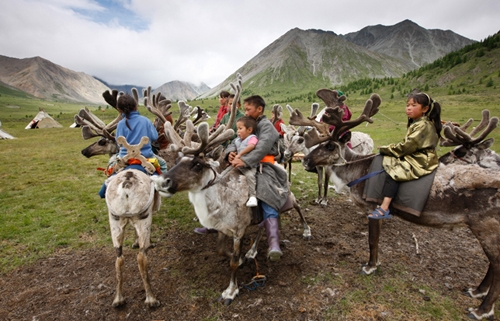
First mentioned in the annals of history by the Chinese Tang Dynasty back in 618 AD, they stand out as a special nomadic tribe even in a country chock-full of them. Over the years, the Tsaatan have developed a unique culture and tradition borne out of the very forests they inhabit, and most importantly, the reindeer they depend their lives on. Their essence is summed up perfectly by Ganbat, a Tsaatan leader, when he said: “The reindeer is the most important thing in our lives. If there were no reindeer, we would not exist.” Thus the world has come to know them as the “Reindeer People” – Mongolia’s last surviving nomadic reindeer herders.
Model of a simple life
The Tsaatan’s lifestyle is perhaps best described as being on the edge of subsistence living, meaning they survive only by virtue of man’s basic needs: air, water, food, clothing, and shelter. Generally, they refrain from indulging in the excesses of life, like many of us do nowadays, and in fact relish their roles as self-appointed guardians of nature in the region which they inhabit. They don’t see any reason for change, too, citing that their ancestors were able to tame the taiga wilderness for millennia.
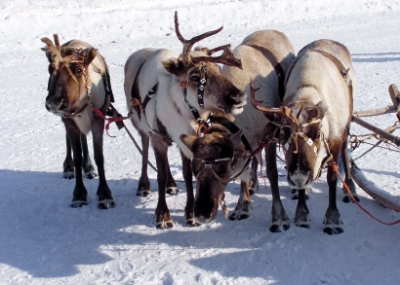 For them, it’s just a simple point of moving when things get too rough in the area where they stay. These nomadic herders shuffle between the western and eastern taigas five to ten times a year in order to find more suitable climates and grazing pastures for their reindeer herds, packing along their teepees and what few earthly possessions they own. After a few weeks, they get ready to move again, settle for a while, and then repeat the cycle all over.
The Tsaatan are known for treating their reindeer in a very special, almost reverent way, as they rely on the animal to supply most of their basic needs. What the tribe prizes it most for is its indispensable use as transportation, which is a necessity given their nomadic tendencies and the inherent ruggedness and vastness of the terrain in which they constantly move. It also provides them with reindeer milk, which for them doubles as a refreshing beverage and as their main ingredient for a food staple, cheese. Tsaatan weapons and tools are even hewn from the animal’s antlers.
Surprisingly, though, is the fact that the tribe does not use the reindeer for meat, preferring instead to subsist on elks, moose, or boars caught from the wilderness, making them unique among reindeer herding communities. As a pleasant twist, the reindeer themselves rely on the Tsaatan for survival, thus making the relationship between human and animal mutual. The tribe goes to great lengths in finding optimal pastures for the animals, as well as in protecting them from natural predators like wolves. This is perhaps what separates them from most of us in the modern world – their very identity and survival is linked directly to their reindeer herd, and vice-versa. For them, it is taboo to mistreat an animal, unlike in many parts of the planet wherein wildlife are driven into extinction or used as test dummies in experiments.
On the brink
However, the Tsaatan have never been more endangered than they are today. They stand on the brink of being assimilated into the modern world, helped by the fact that the Mongolian government has pulled the plug on their support and is persuading them to finally settle down. Their children now go to school in nearby towns, where they get into contact with outsiders, the media, and most of all, technology. In fact, many of the tribe’s youth choose the domestic over nomadic life.
The elderly Tsaatan themselves believe that it may only be a matter of time before the tribe is fully integrated into modern settlements. Says one of them: “One of my fears is that the young people may decide to leave the taiga, and that old people like me will end up alone.”
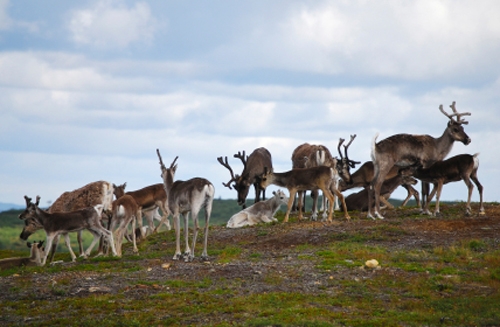
To date, there are only about 44 families remaining in the tribe, with the actual number of their population ranging anywhere between 200 and 400. The greatest threat to the Tsaatan existence, though, is the dwindling number of their reindeer herd, as well as the wildlife around them, where their destiny is tied to. From a high of more than 2,000 in 1977, the number of their domesticated reindeer is estimated to have fallen to less than 600.
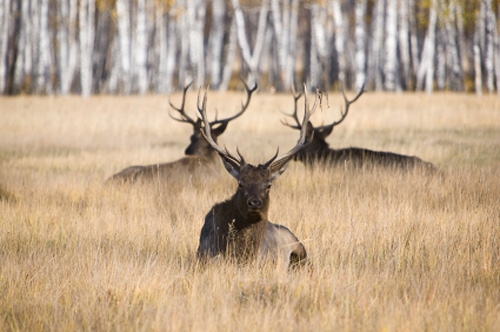
The cause has since been traced to diseases and inborn defect in reindeer calves, which was brought about by inbreeding that inevitably weakens a species. The tribe is powerless to do anything about the situation though, lacking the technology to do so. Bayandalai, a Tsaatan herder, says: “The reindeer our ancestors used to herd were healthy.”
The unfortunate circumstance has driven many in the tribe to settle in nearby towns, eking out a living by posing with their reindeer for the tourists. This further affects the reindeer population, as the animals are not suited for staying in one place and are rather used to constant movement. Compounding their problems are the exploitative tour operators who earn a lucrative living at the tribe’s expense.
“Tour operators were taking Americans and Europeans out to this remote place, charging thousands of dollars, and the community wasn’t getting a penny of that,” says researcher Morgan Keay. Not only are the Tsaatan forced to accommodate tourists out of good will, the visitors also use up resources that the tribe would have otherwise used for themselves.
How we can help
It seems ironic that modern technology holds the key to saving this nomadic tribe, but it’s true. Researchers have discerned that many of the Tsaatan reindeer herds are infected by brucellosis, which is a highly infectious disease that affects the animals’ reproductive systems, thereby resulting in calves born with abnormalities or even dead. The problem, of course, is money.
In the past, the Mongolian government had provided veterinary care to the tribe, but has since been stopped. Now, the Tsaatan are forced to earn money in order to afford animal care. An alternative is the introduction of other reindeer species from Siberia and Scandinavia, which would be then allowed to mate with the Tsaatan’s herd in order to produce stronger and healthier offspring. However, this will still need funding. It is certainly a good thing that non-government organizations like the Itgel Foundation have sprung up in recent years with the goal of helping fund the preservation of the “reindeer people.”
Being the tough and self-sufficient people that they are, the Tsaatan aren’t taking the extinction of their tribe sitting down. Drawing inspiration from the very tour operators that have slighted them, they focused on creating their own eco-tourism industry. Today, they take pride in the Tsaatan Community and Visitors Center, which takes visitors on a tour into nature and the tribe’s lifestyle. It is not only a source of income, but a showcase for their unique culture as well.
Why should we help save them, one may ask. According to Daniel Plumley, a member of an NGO raising funds for the Tsaatan, “It’s in everyone’s best interest that the Tsaatan survive in their native habitat. They are responsible stewards of the land with a deep knowledge of plants, weather, and animals that they’ve accumulated over the centuries. It is a culture which the West can learn from.”

The latest features
Summer Destination to Avoid: Gulf of Mexico
 EPA is failing to do their job monitoring the air and reporting factual data. The people need to be made aware that their lives and long term livelihood are at stake because of the air quality in Gulf of Mexico.
How to Avoid Traveling Troubles
 Traveling to a certain destination might not become memorable if there are too many troubles along the way. Remember that even the best trips are usually not trouble-free. Follow these tips that help lessen the hassles.
Unique Toys from Japan
 Japan is known for its fascinating, and sometimes, eccentric culture. From anime, karaoke, to advanced technology, the Land of the Rising Sun always has something unique to offer.
Exploring California's Venice Beach
 Travelers who are after the sunny side of Southern California can visit the beautifully eccentric Venice Beach, also known as Arnold Schwarzenegger’s Muscle Beach, home to Hollywood royalties Julia Roberts, Kate Beckinsale, and Nicolas Cage.
When Mother Nature wields terror
 Some places are made dangerous by the conflicts brought about by humans. But in these towns and cities—most of them heavily populated—it is Mother Nature which is always on the verge of wrath, wrecking havoc of unimaginable proportions.
Slaughter of dolphins comes to cinemas
 Ric O’Barry once captured and trained dolphins in amusement parks and made the character Flipper world famous. Now, he is the animals’ unlikely champion, exposing the savage ways they are hunted in a small town in Japan. This time, he wants the dolphins swim free.
The new Bollywood fever
 As one of the major film production centers in the world, Bollywood churns out about 1,0000 movies, most of which cater to India’s masses. They precariously enact their lives through the characters, escaping to a world where everything in the end gets resolved in song and dance.
Finding Haiti Amid the Rubbles
 Weeks after the earthquake that rocked Haiti, rescuers are still finding survivors amid the rubbles. It seems that the hardy spirit of Haitians is still alive, inherited from their ancestors who led the only successful slave revolt in history.

